|
|
|
|
|
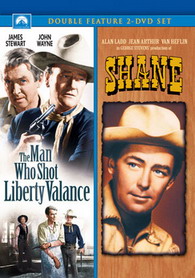
Shane + Man who shot Liberty Valence
STEVENS GEORGE FORD JOHN
| 13,99 $
|
|
|
|
 Feuilleter
|
|
|
|
|
|
Ajouter à ma liste de souhaits
|
|
|
Shane + Man who shot Liberty Valence
de
STEVENS GEORGE FORD JOHN
| Centre les Rivières |
4225, boulevard des Forges local P13
Trois-Rivières
G8Y 1W2 |
819-376-7227 |
0 |
Heures
d'ouverture |
Pour s'y rendre |
| Chicoutimi |
1120, boulevard Talbot
Chicoutimi
G7H 7R2 |
418-698-1586 |
0 |
Lu Mar Mer
9h00 à 21h00
Je Ven
9h00 à 21h00
Samedi
9h00 à 18h00
Dimanche
10h00 à 18h00 |
Pour s'y rendre |
| St-Romuald |
1238 rue de la Concorde
Saint-Romuald
G6W 0M7 |
418-903-1095 |
0 |
Non
disponible |
|
| Jean-Talon |
250 Jean Talon Est
Montréal
H2R 1S7 |
438-387-1091 |
0 |
Non
disponible |
|
| Lebourgneuf |
1580 boul. Lebourgneuf
Québec
G2K 2M4 |
418-380-8118 |
0 |
Lu Mar Mer
9h00 à 21h00
Je Ven
9h00 à 21h00
Samedi
9h00 à 18h00
Dimanche
10h00 à 18h00 |
Pour s'y rendre |
| Place des Arts |
1501 rue Jeanne-Mance
Montréal
H2X 1Z8 |
514-281-0367 |
0 |
Heures
d'ouverture |
Pour s'y rendre |
| Carrefour Angrignon |
7077, Boul. Newman local 00120
Ville Lasalle
H8N 1X1 |
514-365-2587 |
0 |
Heures
d'ouverture |
Pour s'y rendre |
| Avenue du Parc |
5117, avenue du Parc
Montreal
H2V 4G3 |
514-276-7651 |
0 |
Heures
d'ouverture |
Pour s'y rendre |
| Beauport |
3333 rue du Carrefour local 158
Québec
G1C 5R9 |
581-742-3200 |
0 |
Heures
d'ouverture |
Pour s'y rendre |
| Saint-Bruno |
205 boulevard des Promenades
St-Bruno de Montarville
J3V 5K3 |
450-653-0546 |
0 |
Heures
d'ouverture |
Pour s'y rendre |
| Brossard |
6925, boul. Taschereau
Brossard
J4Z 1A7 |
450-443-5350 |
0 |
Heures
d'ouverture |
Pour s'y rendre |
| Centre Laval |
1600, boul. le Corbusier #109
Laval
H7S 1Y9 |
450-682-2587 |
0 |
Heures
d'ouverture |
Pour s'y rendre |
| Champigny Saint-Denis |
4380, rue St-Denis
Montréal
H2J 2L1 |
514-844-2587 |
0 |
Heures
d'ouverture |
Pour s'y rendre |
| Complexe Desjardins |
C.P. 393 150, rue Ste-Cath.O - local #113
Montréal
H5B 1B5 |
514-288-4844 |
0 |
Heures
d'ouverture |
Pour s'y rendre |
| Vaudreuil-Dorion |
54, Blvd De la Cité des Jeunes Local 100
Vaudreuil-Dorion
J7V 9L5 |
450-218-0571 |
0 |
Heures
d'ouverture |
Pour s'y rendre |
| Plaza St-Hubert |
6255 rue Saint-Hubert
Montréal
H2S 2L9 |
514-288-0952 |
0 |
Heures
d'ouverture |
Pour s'y rendre |
| Boisbriand |
3220 Av. des Grandes Tourelles, Faubourg Boisbriand
Boisbriand, QC
J7H 0A2 |
579-979-6888 |
0 |
Heures
d'ouverture |
Pour s'y rendre |
| Fleury |
1691, rue Fleury Est
Montréal
H2C 1T1 |
514-384-9920 |
0 |
Heures
d'ouverture |
Pour s'y rendre |
| Gatineau |
1100, Boul. Maloney Ouest
Gatineau
J8T 6G3 |
819-243-9700 |
0 |
Heures
d'ouverture |
Pour s'y rendre |
| Place Longueuil |
825 rue Saint-Laurent Ouest Local : 144
Longueuill, QC
J4K 2V1 |
579-881-1402 |
0 |
Heures
d'ouverture |
Pour s'y rendre |
| Granby |
50-2 rue Simonds Nord
Granby
J2J 2L1 |
450-375-0699 |
0 |
Heures
d'ouverture |
Pour s'y rendre |
| Saint-Jérome |
900, boul. Grignon local # 60
St-Jérôme
J7Y 3S7 |
450-432-9100 |
0 |
Heures
d'ouverture |
Pour s'y rendre |
| Pointe-Claire |
6815, Route Transcanadienne, Local C001
Pointe-Claire
H9R 1C4 |
514-782-1222 |
0 |
Heures
d'ouverture |
Pour s'y rendre |
| Rosemère |
382 boul. Labelle
Rosemère
J7A 3R8 |
450-434-0202 |
0 |
Heures
d'ouverture |
Pour s'y rendre |
| Carrefour Laval |
3035 Boulevard Le Carrefour Local SR24B
Laval
H7T 1C8 |
450-681-3032 |
0 |
Heures
d'ouverture |
Pour s'y rendre |
| Drummondville |
520 boul Saint-Joseph
Drummondville
J2C 2B8 |
819-850-2000 |
0 |
Heures
d'ouverture |
Pour s'y rendre |
| St-Georges de Beauce |
8540, Boulevard Lacroix
St-Georges de Beauce
G5Y 2B5 |
418-227-3182 |
0 |
Heures
d'ouverture |
Pour s'y rendre |
| Côte-des-Neiges |
5252, chemin Côte-des-Neiges
Montréal
H3T 1X8 |
514-342-1515 |
0 |
Heures
d'ouverture |
Pour s'y rendre |
| Repentigny |
100 Boul. Brien Ouest, local 158b
Repentigny
J6A 5N4 |
450-932-6892 |
0 |
Heures
d'ouverture |
Pour s'y rendre |
| Trois-Rivières |
3275, Boul des Récollets
Trois-Rivières
G9A 6M1 |
819-840-2624 |
0 |
Heures
d'ouverture |
Pour s'y rendre |
| Centre Rockland |
2305 Chemin Rockland
Mont-Royal
H3P 3E9 |
514-543-5221 |
0 |
Heures
d'ouverture |
Pour s'y rendre |
| Place du Royaume |
1401 boulevard Talbot local #170
Chicoutimi
G7H 5N6 |
581-654-1127 |
0 |
Heures
d'ouverture |
Pour s'y rendre |
| Carrefour l'Estrie |
3050, boul. Portland - local N-11
Sherbrooke
J1L 1K1 |
819-569-9957 |
0 |
Heures
d'ouverture |
Pour s'y rendre |
| St-Jean-sur-Richelieu |
927 Boulevard Séminaire Nord
Montréal
J3A 1B5 |
579-381-1110 |
0 |
Non
disponible |
|
| Sorel |
450, boul. Poliquin - Local 102
Sorel
J3P 7R5 |
450-746-8771 |
0 |
Heures
d'ouverture |
Pour s'y rendre |
| Les Galeries de Terrebonne |
1185, boul. Moody Local 081
Terrebonne
J6W 3Z5 |
450-492-1011 |
0 |
Heures
d'ouverture |
Pour s'y rendre |
| Lévis |
1200 Alphonse-Desjardins #0120
Lévis
G6V 6Y8 |
418-837-5538 |
0 |
Heures
d'ouverture |
Pour s'y rendre |
| Galeries d Anjou |
7999, boul. Les Galeries d'Anjou
Ville d'Anjou
H1M 1W6 |
514-353-2353 |
0 |
Heures
d'ouverture |
Pour s'y rendre |
| Victoriaville |
1111, boul. Jutras Est - Local 1
Victoriaville
G6S 1C1 |
819-357-4878 |
0 |
Heures
d'ouverture |
Pour s'y rendre |
| Place Ville Marie |
1 Place Ville-Marie, local 11170
Montréal, QC
H3B 2C4 |
514-552-9649 |
0 |
Heures
d'ouverture |
Pour s'y rendre |
|
|
|
|
EN SAVOIR PLUS
Résumé
Shane : The simple story of a Wyoming range war is elevated to near-mythical status in producer/director George Stevens' Western classic Shane. Alan Ladd plays the title character, a mysterious drifter who rides into a tiny homesteading community and accepts the hospitality of a farming family. Patriarch Joe Starrett (Van Heflin) is impressed by the way Shane handles himself when facing down the hostile minions of land baron Emile Meyer, though he has trouble placing his complete trust in the stranger, as his Marion (Jean Arthur) is attracted to Shane in spite of herself, and his son Joey (Brandon De Wilde) flat-out idolizes Shane. When Meyer is unable to drive off the homesteaders by sheer brute strength, he engages the services of black-clad, wholly evil hired gun Jack Wilson (Jack Palance). The moment that Wilson shows he means business by shooting down hotheaded farmer Frank Torrey (Elisha Cook Jr.) is the film's most memorable scene: after years of becoming accustomed to carefully choreographed movie death scenes, the suddenness with which Torrey's life is snuffed out — and the force with which he falls to the ground — are startling. Shane knows that a showdown with Wilson is inevitable; he also knows that, unintentionally, he has become a disruptive element in the Starrett family. The manner in which he handles both these problems segues into the now-legendary "Come back, Shane" finale. Cinematographer Loyal Griggs imbues this no-frills tale with the outer trappings of an epic, forever framing the action in relation to the unspoiled land surrounding it. A.B. Guthrie Jr.'s screenplay, adapted from the Jack Schaefer novel, avoids the standard good guy/bad guy clichés: both homesteaders and cattlemen are shown as three-dimensional human beings, flaws and all, and even ostensible villain Emile Meyer comes off reasonable and logical when elucidating his dislike of the "newcomers" who threaten to divest him of his wide open spaces.
[Hal Erickson - All Movie Guide]
Man who short Liberty Valence : Like Pontius Pilate, director John Ford asks "What is truth?" in The Man Who Shot Liberty Valance—but unlike Pilate, Ford waits for an answer. The film opens in 1910, with distinguished and influential U.S. senator Ransom Stoddard (James Stewart) and his wife Hallie (Vera Miles) returning to the dusty little frontier town where they met and married twenty-five years earlier. They have come back to attend the funeral of impoverished "nobody" Tom Doniphon (John Wayne). When a reporter asks why, Stoddard relates a film-long flashback. He recalls how, as a greenhorn lawyer, he had run afoul of notorious gunman Liberty Valance (Lee Marvin), who worked for a powerful cartel which had the territory in its clutches. Time and again, "pilgrim" Stoddard had his hide saved by the much-feared but essentially decent Doniphon. It wasn't that Doniphon was particularly fond of Stoddard; it was simply that Hallie was in love with Stoddard, and Doniphon was in love with Hallie and would do anything to assure her happiness, even if it meant giving her up to a greenhorn. When Liberty Valance challenged Stoddard to a showdown, everyone in town was certain that the greenhorn didn't stand a chance. Still, when the smoke cleared, Stoddard was still standing, and Liberty Valance lay dead. On the strength of his reputation as the man who shot Valance, Stoddard was railroaded into a political career, in the hope that he'd rid the territory of corruption. Stoddard balked at the notion of winning an election simply because he killed a man-until Doniphon, in strictest confidence, told Stoddard the truth: It was Doniphon, not Stoddard, who shot down Valance. Stoddard was about to reveal this to the world, but Doniphon told him not to. It was far more important in Doniphon's eyes that a decent, honest man like Stoddard become a major political figure; Stoddard represented the "new" civilized west, while Doniphon knew that he and the West he represented were already anachronisms. Thus Stoddard went on to a spectacular political career, bringing extensive reforms to the state, while Doniphon faded into the woodwork. His story finished, the aged Stoddard asks the reporter if he plans to print the truth. The reporter responds by tearing up his notes. "This is the West, sir, " the reporter explains quietly. "When the legend becomes fact, print the legend." Dismissed as just another cowboy opus at the time of its release, The Man Who Shot Liberty Valance has since taken its proper place as one of the great Western classics. It questions the role of myth in forging the legends of the West, while setting this theme in the elegiac atmosphere of the West itself, set off by the aging Stewart and Wayne. [Hal Erickson - All Movie Guide]
Détails
|
Prix :
|
13,99 $
|
|
Catégorie :
|
|
|
Auteur :
|
STEVENS GEORGE FORD JOHN
|
|
Titre :
|
Shane + Man who shot Liberty Valence
|
|
Date de parution :
|
juillet 2008
|
|
Langue :
|
Anglais
|
|
|
|
Éditeur :
|
Alliance Ent.-Paramount
|
|
|
|
|
|
Sujet :
|
FILM WESTERN
|
|
UPC :
|
097361371849
|
|
Référence Renaud-Bray :
|
750162770
|
|
|
|
No de produit :
|
941040
|
|
|
1449 article(s) au panier.
Renaud-Bray vous offre
les frais de livraison *
|