|
|
|
|
|
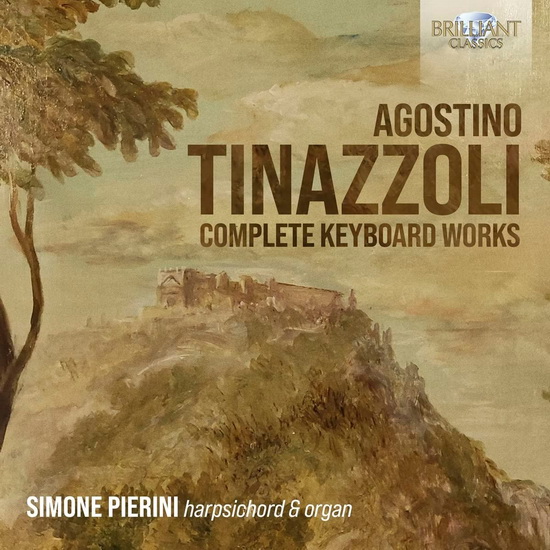
Tinazzoli: Complete Keyboard Works (2 CD)
AGOSTINO TINAZZOLI
| 29,99 $
|
|
|
|
 Feuilleter
|
|
|
|
|
|
Ajouter à ma liste de souhaits
|
|
|
Tinazzoli: Complete Keyboard Works (2 CD)
de
TINAZZOLI, AGOSTINO
| Centre les Rivières |
4225, boulevard des Forges local P13
Trois-Rivières
G8Y 1W2 |
819-376-7227 |
0 |
Heures
d'ouverture |
Pour s'y rendre |
| Chicoutimi |
1120, boulevard Talbot
Chicoutimi
G7H 7R2 |
418-698-1586 |
0 |
Heures
d'ouverture |
Pour s'y rendre |
| St-Romuald |
1238 rue de la Concorde
Saint-Romuald
G6W 0M7 |
418-903-1095 |
0 |
Heures
d'ouverture |
|
| Jean-Talon |
250 Jean Talon Est
Montréal
H2R 1S7 |
438-387-1091 |
0 |
Heures
d'ouverture |
|
| Lebourgneuf |
1580 boul. Lebourgneuf
Québec
G2K 2M4 |
418-380-8118 |
0 |
Heures
d'ouverture |
Pour s'y rendre |
| Place des Arts |
1501 rue Jeanne-Mance
Montréal
H2X 1Z8 |
514-281-0367 |
0 |
Heures
d'ouverture |
Pour s'y rendre |
| Ste-Dorothée |
520, Autoroute Chomedey
Laval
H7X 3S9 |
450-719-2020 |
0 |
Heures
d'ouverture |
Pour s'y rendre |
| Ste-Foy |
2450, boul. Laurier, local M26
Québec
G1V 2L1 |
418-653-2387 |
0 |
Heures
d'ouverture |
Pour s'y rendre |
| Mail Champlain |
2151, boul. La Pinière
Brossard
J4W 2T5 |
450-671-7654 |
0 |
Heures
d'ouverture |
Pour s'y rendre |
| Carrefour Angrignon |
7077, Boul. Newman local 00120
Ville Lasalle
H8N 1X1 |
514-365-2587 |
0 |
Heures
d'ouverture |
Pour s'y rendre |
| Avenue du Parc |
5117, avenue du Parc
Montreal
H2V 4G3 |
514-276-7651 |
0 |
Heures
d'ouverture |
Pour s'y rendre |
| Beauport |
3333 rue du Carrefour local 158
Québec
G1C 5R9 |
581-742-3200 |
0 |
Heures
d'ouverture |
Pour s'y rendre |
| Saint-Bruno |
205 boulevard des Promenades
St-Bruno de Montarville
J3V 5K3 |
450-653-0546 |
0 |
Heures
d'ouverture |
Pour s'y rendre |
| Brossard |
6925, boul. Taschereau
Brossard
J4Z 1A7 |
450-443-5350 |
0 |
Heures
d'ouverture |
Pour s'y rendre |
| Centre Laval |
1600, boul. le Corbusier #109
Laval
H7S 1Y9 |
450-682-2587 |
0 |
Heures
d'ouverture |
Pour s'y rendre |
| Champigny Saint-Denis |
4380, rue St-Denis
Montréal
H2J 2L1 |
514-844-2587 |
0 |
Heures
d'ouverture |
Pour s'y rendre |
| Complexe Desjardins |
C.P. 393 150, rue Ste-Cath.O - local #113
Montréal
H5B 1B5 |
514-288-4844 |
0 |
Heures
d'ouverture |
Pour s'y rendre |
| Vaudreuil-Dorion |
54, Blvd De la Cité des Jeunes Local 100
Vaudreuil-Dorion
J7V 9L5 |
450-218-0571 |
0 |
Heures
d'ouverture |
Pour s'y rendre |
| Plaza St-Hubert |
6255 rue Saint-Hubert
Montréal
H2S 2L9 |
514-288-0952 |
0 |
Heures
d'ouverture |
Pour s'y rendre |
| Boisbriand |
3220 Av. des Grandes Tourelles, Faubourg Boisbriand
Boisbriand, QC
J7H 0A2 |
579-979-6888 |
0 |
Heures
d'ouverture |
Pour s'y rendre |
| Fleury |
1691, rue Fleury Est
Montréal
H2C 1T1 |
514-384-9920 |
0 |
Heures
d'ouverture |
Pour s'y rendre |
| Gatineau |
1100, Boul. Maloney Ouest
Gatineau
J8T 6G3 |
819-243-9700 |
0 |
Heures
d'ouverture |
Pour s'y rendre |
| Place Longueuil |
825 rue Saint-Laurent Ouest Local : 144
Longueuill, QC
J4K 2V1 |
579-881-1402 |
0 |
Heures
d'ouverture |
Pour s'y rendre |
| Granby |
50-2 rue Simonds Nord
Granby
J2J 2L1 |
450-375-0699 |
0 |
Heures
d'ouverture |
Pour s'y rendre |
| Saint-Jérome |
900, boul. Grignon local # 60
St-Jérôme
J7Y 3S7 |
450-432-9100 |
0 |
Heures
d'ouverture |
Pour s'y rendre |
| Pointe-Claire |
6815, Route Transcanadienne, Local C001
Pointe-Claire
H9R 1C4 |
514-782-1222 |
0 |
Heures
d'ouverture |
Pour s'y rendre |
| Rosemère |
382 boul. Labelle
Rosemère
J7A 3R8 |
450-434-0202 |
0 |
Heures
d'ouverture |
Pour s'y rendre |
| Carrefour Laval |
3035 Boulevard Le Carrefour Local SR24B
Laval
H7T 1C8 |
450-681-3032 |
0 |
Heures
d'ouverture |
Pour s'y rendre |
| Drummondville |
520 boul Saint-Joseph
Drummondville
J2C 2B8 |
819-850-2000 |
0 |
Heures
d'ouverture |
Pour s'y rendre |
| St-Georges de Beauce |
8540, Boulevard Lacroix
St-Georges de Beauce
G5Y 2B5 |
418-227-3182 |
0 |
Heures
d'ouverture |
Pour s'y rendre |
| Côte-des-Neiges |
5252, chemin Côte-des-Neiges
Montréal
H3T 1X8 |
514-342-1515 |
0 |
Heures
d'ouverture |
Pour s'y rendre |
| Repentigny |
100 Boul. Brien Ouest, local 158b
Repentigny
J6A 5N4 |
450-932-6892 |
0 |
Heures
d'ouverture |
Pour s'y rendre |
| Trois-Rivières |
3275, Boul des Récollets
Trois-Rivières
G9A 6M1 |
819-840-2624 |
0 |
Heures
d'ouverture |
Pour s'y rendre |
| Centre Rockland |
2305 Chemin Rockland
Mont-Royal
H3P 3E9 |
514-543-5221 |
0 |
Heures
d'ouverture |
Pour s'y rendre |
| Place du Royaume |
1401 boulevard Talbot local #170
Chicoutimi
G7H 5N6 |
581-654-1127 |
0 |
Heures
d'ouverture |
Pour s'y rendre |
| Carrefour l'Estrie |
3050, boul. Portland - local N-11
Sherbrooke
J1L 1K1 |
819-569-9957 |
0 |
Heures
d'ouverture |
Pour s'y rendre |
| St-Jean-sur-Richelieu |
927 Boulevard Séminaire Nord
Montréal
J3A 1B5 |
579-381-1110 |
0 |
Non
disponible |
|
| Sorel |
450, boul. Poliquin - Local 102
Sorel
J3P 7R5 |
450-746-8771 |
0 |
Heures
d'ouverture |
Pour s'y rendre |
| Les Galeries de Terrebonne |
1185, boul. Moody Local 081
Terrebonne
J6W 3Z5 |
450-492-1011 |
0 |
Heures
d'ouverture |
Pour s'y rendre |
| Lévis |
1200 Alphonse-Desjardins #0120
Lévis
G6V 6Y8 |
418-837-5538 |
0 |
Heures
d'ouverture |
Pour s'y rendre |
| Galeries d Anjou |
7999, boul. Les Galeries d'Anjou
Ville d'Anjou
H1M 1W6 |
514-353-2353 |
0 |
Heures
d'ouverture |
Pour s'y rendre |
| Victoriaville |
1111, boul. Jutras Est - Local 1
Victoriaville
G6S 1C1 |
819-357-4878 |
0 |
Heures
d'ouverture |
Pour s'y rendre |
| Place Ville Marie |
1 Place Ville-Marie, local 11170
Montréal, QC
H3B 2C4 |
514-552-9649 |
0 |
Heures
d'ouverture |
Pour s'y rendre |
|
|
|
|
EN SAVOIR PLUS
Résumé
*** Résumé en anglais seulement ***
The pieces presented here are ascribed to a composer whose life appears to be both mysterious and adventurous: quite little of Agostino Tinazzoli is known, including biographical details such as his occupations, teachers and places of residence (except for limited, incomplete information). However, some unusual facts preserved through his music illustrate that this composer had no ordinary life. The New Grove Dictionary of Music and Musicians informs us that
Agostino Tinazzoli was born in Bologna during the second half of the 17th century, quite possibly around 1660. Most of the works attributed to Tinazzoli concern sacred music, including various oratorios (such as Il sacrifizio di Gefte), and masses (such as an incomplete Requiem). This collection of solo keyboard music comes from two manuscripts currently preserved in Münster and Bologna. The former contains all the pieces included in the two CDs, while the latter includes Toccata No.18 and a larger version of the Toccata No.17 including all the movements performed (the Münster manuscript contains only the first movement). Four of the pieces of the collection are specified for the organ, and they are intended to be used during the Mass: there are two Offertorios, one Elevazione and a Post Agnus, and all of them are titled Sonata. Tinazzoli assigns the terms Sonata, Toccata, and Capriccio to these pieces (except for the Passagallo), but there is seemingly no criteria for the choice of name. The collection employs a wide range of styles and formal structures: there are concerto-like pieces (Toccata No.17, Sonata no.4), as well as fugato pieces (Sonata No.11), and dance movements (for example, the Sarabanda in Sonata No.4, or the concluding Minuetto in Capriccio No.3). While we are unable to determine a precise timeframe of composition, it seems that even if the pieces may have been composed in disparate years Tinazzoli remained well informed throughout his career about the stylistic developments occurring in Italy and Europe in his day: the organ pieces, for example, adhere to the late-18th-century style, which was fundamentally more operatic. The most important feature of these pieces, however, is the pervasive employment of basso continuo: the pieces are almost constantly notated in two voices (treble and bass) but with figured bass numerals throughout. In this collection, Pierini has employed basso continuo and improvisation features in the most stylistically appropriate way, considering the wide range of styles included. The pieces presented here are ascribed to a composer whose life appears to be both mysterious and adventurous at the same time: little of Agostino Tinazzoli (ca 1660-1725) is known, as concerns biographical details such as his living places, his teachers, and the job positions he held. However, some unusual facts preserved through his music make clear that this composer probably had no ordinary life: during his stay in Rome he probably committed, or was involved, in an unspecified crime: for this reason, he got incarcerated in Castel Sant'Angelo, Rome, which during Tinazzoli's time was partly used as a city jail. Here he continued to compose: his cantata "In Carcere penoso" was written with carbon on the prison wall, and it's beauty prompted his immediate release from jail. This collection of Tinazzoli's keyboard music employs a wide range of styles and formal structures: we have concerto-like pieces (Toccata No.17, Sonata no. 4), as well as fugato pieces (Sonata No.11), and dance movements (the Sarabanda in Sonata No.4). The most important feature of these pieces, however, is the massive employment of basso continuo: the pieces are almost everywhere notated in two voices (treble and bass), but continuo numeration is employed everywhere. This means that the performer has to add other voices, or remove them in order to make dynamic effects, and sometimes even to improvise counterpoint, according to stylistic continuo rules in early 18th century's Italy. Born in Rome in 1996, Simone Pierini began studying music at the age of eight. Aged eighteen, he graduated in piano at S. Cecilia Conservatory of Music, Rome, with highest honors, and consequently took part in masterclasses and post-graduate courses. He afterwards grew interest in historically informed piano practice, attending masterclasses led by Alexei Lubimov, Andreas Staier, Tobias Koch, Stefano Fiuzzi. Subsequently, his interest about historical keyboards in general grew further, and he began studying harpsichord and basso continuo with such teachers as Andrea Coen and Giovanni Togni. He builds an active concert career.
Détails
|
Prix :
|
29,99 $
|
|
Catégorie :
|
|
|
Auteur :
|
AGOSTINO TINAZZOLI
|
|
Titre :
|
Tinazzoli: Complete Keyboard Works (2 CD)
|
|
Date de parution :
|
avril 2023
|
|
|
|
|
|
Éditeur :
|
BRILLIANT CLASSICS ISOTOPE
|
|
|
|
|
|
Sujet :
|
RECITAL VOCAL OU INSTRUMENTAL
|
|
UPC :
|
5028421968759
|
|
Référence Renaud-Bray :
|
18841695
|
|
|
|
No de produit :
|
3966483
|
|
|
|

|
|
Pure
CALLAS, MARIA |
19,99 $
|
|
|
|
Tinazzoli: Complete Keyboard Works (2 CD)
,
TINAZZOLI, AGOSTINO
©
BRILLIANT CLASSICS ISOTOPE
2023
|
|
1449 article(s) au panier.
Renaud-Bray vous offre
les frais de livraison *
|